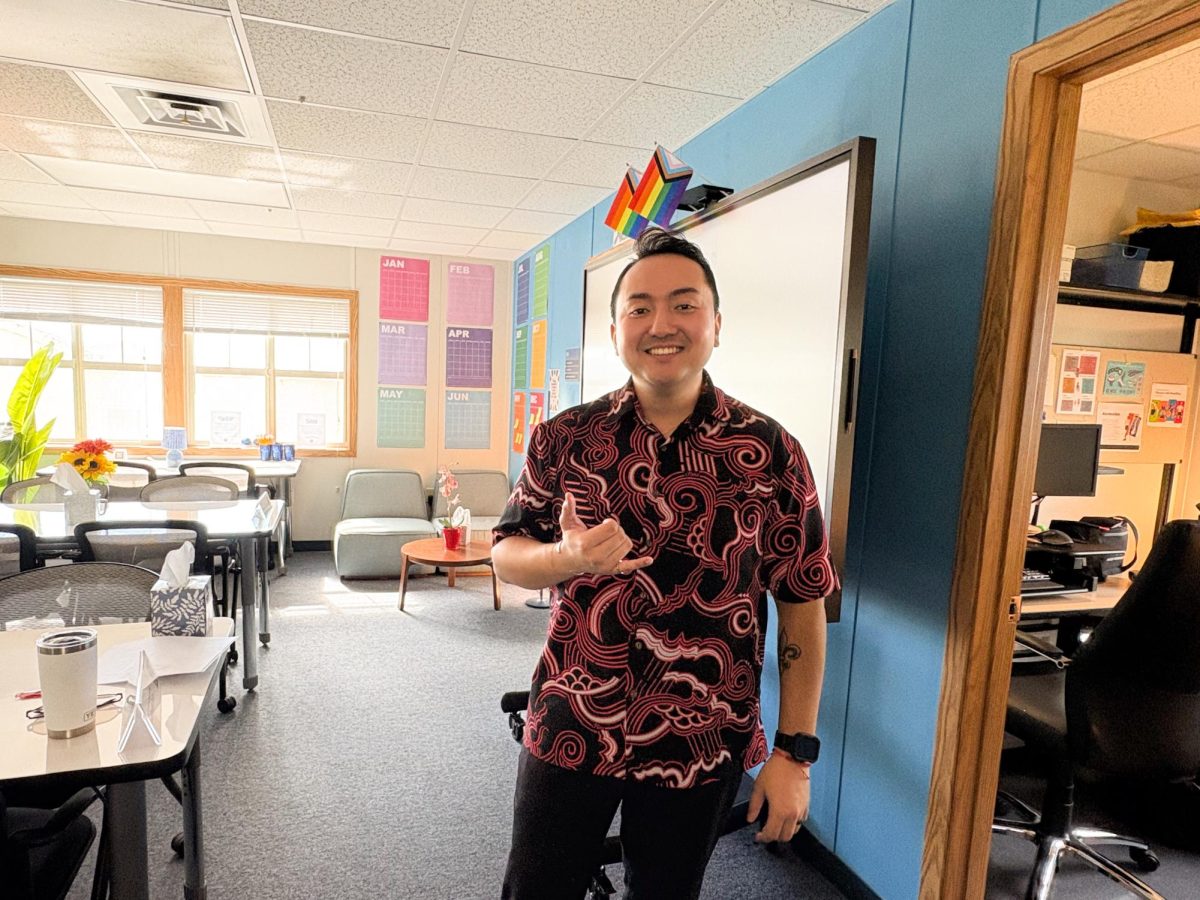
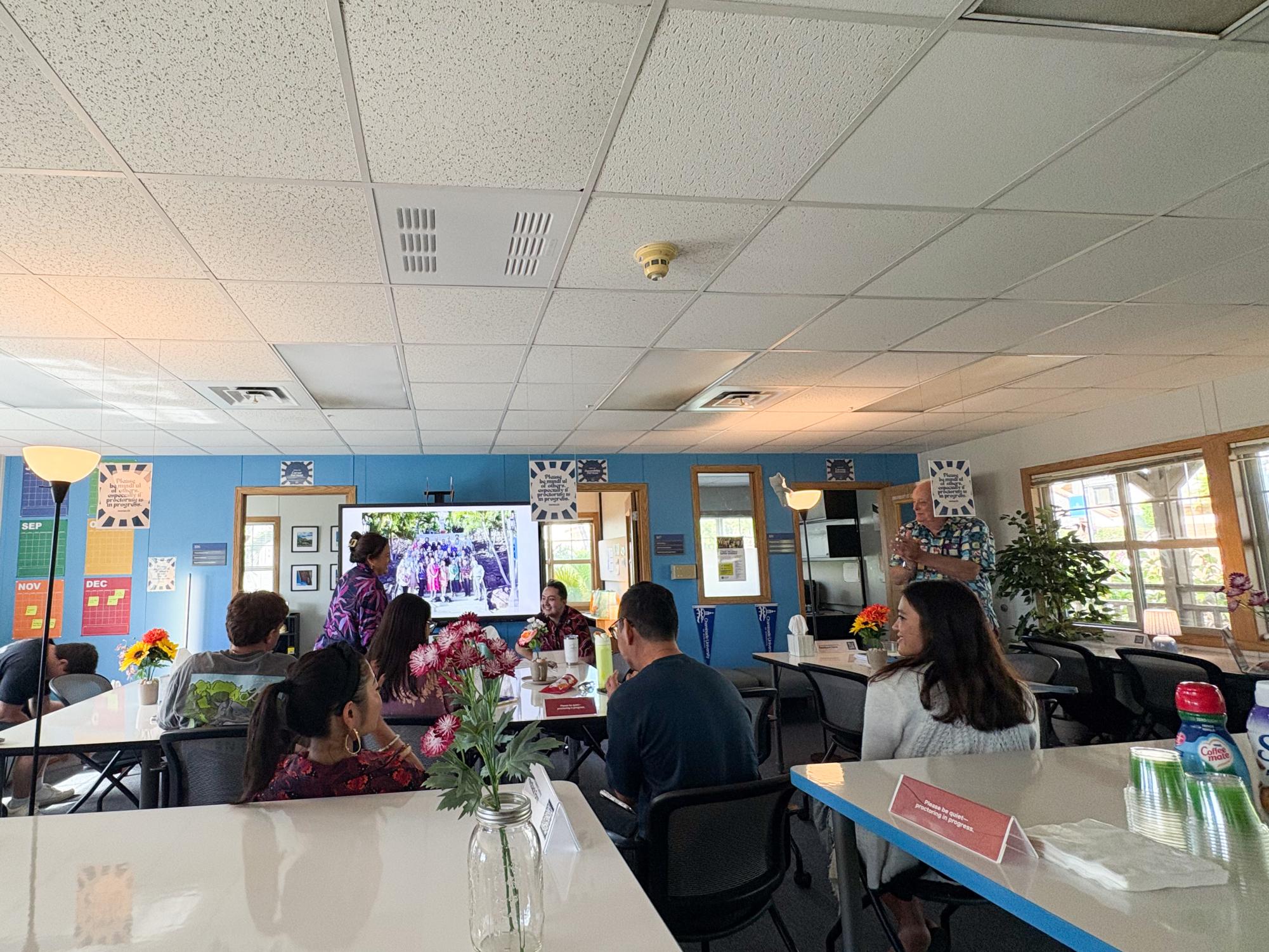
On Monday afternoon, students and staff gathered inside Kōkua ‘Ike to hear Pono Riddle, Chaminade’s director of inclusive excellence and academic success, talk about the experiences that shaped the way he supports students today.
“Honestly, I just came for my service hours,” said Eleanor Akeli, a junior Computer Science major. “But listening to Pono made me stop and think about my own life. To me, it felt real in a way I didn’t expect.”
Pono, 29, began by explaining how he tries to meet students where they are, especially when they come to him stressed or unsure. He said his approach comes from his own journey, which was shaped by faith, family, and moments that forced him to slow down.
His message emphasized that calling is not a single moment but a lifelong process shaped by small choices, such as listening when someone needs support, showing up for people who feel unseen, and paying attention to the moments that make you feel most connected to others.
The talk was part of the Coffee & Callings series, which brings Chaminade’s campus community together to hear guest speakers reflect on the personal, professional, and spiritual experiences that led them to their calling. Previous speakers have included faculty, staff, and community members who were invited to share how their faith, life experiences, and personal challenges helped guide them toward their calling.
Pono’s interest in psychology did not begin right away. When he was younger, he imagined becoming a pediatrician. Later, he pictured himself running a therapy practice. Each idea came from a desire to help others, but he did not yet know what that would look like.
His perspective began to shift during his senior year at Kamehameha Schools Kapālama when a teacher introduced him to the idea of human dignity. The class opened his eyes to empathy, emotional awareness, and the importance of showing up for others. For the first time, psychology felt like the right direction.
He went on to earn his bachelor’s degree in psychology from Chaminade University in 2018 and later completed a Master of Education with an emphasis in educational leadership. As he continued sharing his story, he opened up about growing up in a divorced household and did not understand its impact until he was older.
Growing up in Wahiawā, Mililani, and Māʻili, he often felt different from classmates whose families appeared stable and supportive from the outside. That experience shaped how he understood relationships and emotional well-being, and it sparked an early desire to be present for people whose challenges are not always seen.
Chaminade played a significant role in shaping his perspective on people. Campus Ministry programs, immersion trips, and Marianist mentors pushed him to slow down and see the people who often go unnoticed. One moment that stayed with him came during an LA Service Immersion trip. He visited Skid Row, an area known for its large homeless population and crowded streets lined with tents and makeshift shelters. Many residents there face poverty, addiction, and daily uncertainty. Meeting families in that environment and listening to their stories helped him understand how powerful presence and compassion can be.
After graduating from Chaminade in 2018, he joined Marianist PULSE, a post-graduate service program in Dayton, Ohio, where young adults live in under-resourced neighborhoods and work full-time at local nonprofits. He served with the Empowering Children with Hope and Opportunity program (ECHO), where he assisted counselors and taught social and emotional lessons to students whose families lived in deep poverty. Being with those students every day taught him patience and helped him understand a deeper kind of compassion.
Returning to Hawai‘i in 2019, he was still figuring out his next step. Graduate school was one possibility, and he even came close to becoming a flight attendant after making it through most of the hiring process with Hawaiian Airlines. Then, a friend encouraged him to apply for an internship coordinator position at Chaminade, and he decided to take it.
Just two weeks after he accepted the position at Chaminade, COVID-19 shut down campus operations. What he thought would be a short-term stop became a meaningful turning point as he supported students through a stressful and uncertain time. The experience, he said, taught him patience and reminded him to listen more closely to what God was asking of him.
The challenges of the pandemic forced him to slow down and reconsider the path he had been trying so hard to control. In that stillness, he said he began to see his calling more clearly.
“I tried to force my own plans for a long time,” he said. “But every time I slowed down, I realized God had been nudging me in the same direction all along.”
Today, Pono works closely with students who often feel overwhelmed, unsure, or still seeking their place on campus. He tries to support them by being fully present. He remembers what they tell him, checks in about family, and pays attention when something seems off in their personal lives.
As Pono wrapped up his talk, he told the audience that titles will always fade, but the way you care for people does not. His story reminded many in the room that calling is not a race. It grows through quiet moments, through reflection, and through the simple courage to trust the next step.
“I hope that students know they are not alone,” Riddle said. “Your calling will come, and you do not have to rush it. You just have to keep walking.”